So today I had a full day of flying. I did five trips - 10 flights. The weather was blue skies but bumpy and windy all day. My first trip had me going south to pick up a couple gentlemen and about 20 dead, frozen Canadian Geese. Luckily they were all sealed up in bags - the geese. I've heard in some cases, especially flying right out of the bush, they just throw the dead birds in the back of the plane. Which would be all right if they stayed frozen... Anyways I had it good from what I hear.
My home base has an off-site radio service which handles the traffic. There are essentially three levels of traffic control in Canada. The lowest level, which the vast majority of airports in Canada use, is called an ATF, or Aerodrome Traffic Frequency. My hometown, Sarnia, has this. Essentially it is just a standard frequency that's designated for all aircraft in the area to use. There's no controller, all the airplanes taking off and landing from that airport state their intentions and actions on that frequency, and if there is a conflict with another aircraft, that other aircraft, which is monitoring the same radio freqency, will hear it and the two airplanes can work it out between the two of them. Its entirely optional to monitor the ATF within the vicinity of an airport that has one, although highly recommended. This allows NORAD (aircraft with NO RADio) to use the airport. The next level up uses a Radio Service, more on that in a second. The highest level of traffic control an airport can have is a control tower. Most people before they learn otherwise assume that all airports have a control tower. This is not so, in fact I can list on two hands the airports in Ontario that have one. Usually it has to be pretty busy. A control tower is essentially in charge of the traffic on and around the airport. They must issue you a clearance to land, takeoff, join the circuit, taxi, and go to the bathroom. Its actually quite nice. For some newer pilots, if they haven't had much experience flying within airspace with a control tower, it can be quite intimidating. Since I did all of my initial flight training in Sarnia with no control tower, I was terrified of flying into places with one, and avoided them until I got more practice flying in them with an instructor.
After you get the hang of it, it can actually become quite the security blanket, because you have someone holding your hand telling you what to do and pointing out traffic for you. The middle level of traffic control, like at the home base where I'm working now, is like I said a Radio Service, which is somewhere in between an ATF and a control tower. A Radio Service is not really air traffic control in that they can't tell you what to do and when to do, but they are someone who is monitoring the frequency and keeping track of all the airplanes in the area. All airplanes within the designated zone must be talking to the Radio Service, however the Radio Service provides advisory information only. Sometimes these Radio Services are located directly on the field and are equipped with radar and everything, other times, like here, they are off somewhere in a different town listenning in.
So far up here I have counted three different voices who monitor the Radio Service. There's two males and one female. And they all have different styles. When I say styles I simply mean their tone of voice really. Everything is so standardized with phrases and procedure there's not much room for style in how you handle traffic, but there is in how you treat it. I like the female controller here the best. She's the friendliess and most professional. That is in contrast to my opinion of the controllers down in London. In London I think there were at lease four, 3 males and one female. One controller in London sounds Australian and is quite friendly, he was my favourite to talk to there. The female controller however is often times less then friendly. I've heard her snap on other pilots for mistakes they've made, both major and minor, including me, and chewed them out. Its always an embarrasing moment for a pilot to get chewed or "talked down to" by a controller over the radio.
Anyways my next trip was eastbound to pick up a family I dropped off last week, and on departure I was talking to the female controller. I made a mental note that she was my favourite of the three, which is why I just told the above story. When I landed at destination it was a gusty 15-18 knot direct crosswind to the runway, and it was a bit of a struggle to bring the airplane down nicely, but I enjoyed every second of it. The runway is gravel, and afterwards I decided that I actually like landing on gravel.
In a crosswind landing, there's two difficult parts to the landing. The first is actually making sure the wheels touch down aligned in the direction of motion to prevent premature wear of the tires, and more importantly, to stop from shooting off the side of the runway. The next difficult part is keeping the airplane travelling straight down the runway after touchdown. Airplanes have a tendency to do what's called weathervaning in a crosswind. That when an airplane's nose wants to turn into the wind. This is because the vertical stabilizer is at the back of the airplane, so if the wind pushes the v-stab downwind, then the nose turns upwind just like a weathervane. This isn't a problem with flying, but when you're rolling on the ground it can make it difficult to keep the airplane running straight without weathervaning and rolling off the upwind side of the runway. I decided I like gravel because there's less traction then pavement. This means I can let the airplane weathervane and "skid" sideways a bit after I've touched down during my deceleration which makes things a little easier since the airplane doesn't feel so much like shooting off to one side. At any rate we are trying to prevent any skidding motion, because I imagine on gravel its still hard on the tires, but it does take the edge off landing rollouts in a stiff crosswind.
I knew from dropping the family off last week that it was the wife's first time on an airplane, and she was pretty nervous from what I heard. Last week she had a perfectly smooth day, but today was far from it. Considering that and the turbulence today and gusty crosswind I had today I let everyone know when we were strapping in to takeoff that it would be a bit bumpy today. I felt a bit bad for the wife, because it was a pretty wild takeoff and climbout until we got up a little higher to the smoother air, but she seemed ok since she was prepared for it.
The rest of the flights were uneventful. Today I logged almost 10 hrs of flight time in total, and I'm quite tired and hungry, but it was a good day.
Monday, April 20, 2009

Sunday, April 12, 2009
Funny Thought
I just thought I'd mention a funny thought I had when I was flying with all my freight on Friday. It occurred to me that if I ever went down with all this freight onboard, and I survived the landing - which is pretty good chances cause there's lots of open space in amongst the groupings of trees - all I'd have to do was make a fire and it'd be nothing worse then a camping trip by myself. I'm already pretty much dressed for the weather, and I'd also have a half ton worth of food with me! What more could I want? I'd just collect some firewood, cook up some ravioli, and hang out until the search party found me, haha. Too bad I don't know how to play the guitar.
Finally Flying
Written April 11, 2009
So yesterday I finally started flying. The day before I did a quick checkout with the other pilot who flies for the company, and he gave me the thumbs up, so yesterday the chief pilot and I went up for a single checkout before they turned me loose.
While on takeoff however I noted the airspeed indicator was non-functional, however it was too late to abort the takeoff. If the airspeed indicator doesn’t work, this indicates that the pitot tube is clogged. The pitot tube is a little tube hanging off the underside of one wing that measures ram air pressure, and displays it in the form of knots or mph, on our airspeed indicator in the cockpit. If the pitot tube is blocked, our airspeed indicator doesn’t work. Its not uncommon in snowy conditions for the pitot tube to become blocked with snow or ice, so every certified airplane is equipped with the ability to electrically heat up the pitot tube via a switch in the cockpit to melt off any ice in the pitot tube and thus unclog it.
The airspeed indicator is one of the most important instruments in the cockpit because essentially we fly the airplane using it. Our stall speed is in the form indicated airspeed, we also use a specific airspeed to achieve the best climb performance, and to tell us when its structurally safe to lower the flaps and landing gear (if applicable). So its nice to have a working airspeed indicator.
Anyways in this case we were already past the point of no return. I should have caught this on the takeoff roll before it was too late to go airborne, but it was only my second flight in the airplane, and being not too familiar and comfortable in the airplane yet my reaction times were diminished. Not to mention the Cherokee 6 accelerates and climbs like a bat out of hell when its empty. If I was more comfortable in the airplane I am confident I’d be more on the ball. Oh well, so we did the circuit anyways. In any regard the chief pilot was happy with my performance and was content to turn me loose on the cargo runs.
Once we got back on the ground we fiddled a bit with blowing out the pitot tube to unclog it, and I took it for one more test flight circuit and the airspeed indicator seemed to be working well this time.
So finally we loaded up the Cherokee with 1000 lbs of groceries and off I went. I flew up the coast with my cargo, landed, and helped load it into the pickup truck they had waiting for me. When I got back there was another load waiting for me, so we loaded the plane up once again and off I went again, this time I had about 900 lbs of potatoes and a few cases of pop. I had three trips for the day, all the while thinking that this beats the heck out of framing houses! Other then when I’m loading and unloading the airplane, which doesn‘t even really take more then 5-10 minutes, it doesn’t even feel like I’m working. Life is good.
So yesterday I finally started flying. The day before I did a quick checkout with the other pilot who flies for the company, and he gave me the thumbs up, so yesterday the chief pilot and I went up for a single checkout before they turned me loose.
While on takeoff however I noted the airspeed indicator was non-functional, however it was too late to abort the takeoff. If the airspeed indicator doesn’t work, this indicates that the pitot tube is clogged. The pitot tube is a little tube hanging off the underside of one wing that measures ram air pressure, and displays it in the form of knots or mph, on our airspeed indicator in the cockpit. If the pitot tube is blocked, our airspeed indicator doesn’t work. Its not uncommon in snowy conditions for the pitot tube to become blocked with snow or ice, so every certified airplane is equipped with the ability to electrically heat up the pitot tube via a switch in the cockpit to melt off any ice in the pitot tube and thus unclog it.
The airspeed indicator is one of the most important instruments in the cockpit because essentially we fly the airplane using it. Our stall speed is in the form indicated airspeed, we also use a specific airspeed to achieve the best climb performance, and to tell us when its structurally safe to lower the flaps and landing gear (if applicable). So its nice to have a working airspeed indicator.
Anyways in this case we were already past the point of no return. I should have caught this on the takeoff roll before it was too late to go airborne, but it was only my second flight in the airplane, and being not too familiar and comfortable in the airplane yet my reaction times were diminished. Not to mention the Cherokee 6 accelerates and climbs like a bat out of hell when its empty. If I was more comfortable in the airplane I am confident I’d be more on the ball. Oh well, so we did the circuit anyways. In any regard the chief pilot was happy with my performance and was content to turn me loose on the cargo runs.
Once we got back on the ground we fiddled a bit with blowing out the pitot tube to unclog it, and I took it for one more test flight circuit and the airspeed indicator seemed to be working well this time.
So finally we loaded up the Cherokee with 1000 lbs of groceries and off I went. I flew up the coast with my cargo, landed, and helped load it into the pickup truck they had waiting for me. When I got back there was another load waiting for me, so we loaded the plane up once again and off I went again, this time I had about 900 lbs of potatoes and a few cases of pop. I had three trips for the day, all the while thinking that this beats the heck out of framing houses! Other then when I’m loading and unloading the airplane, which doesn‘t even really take more then 5-10 minutes, it doesn’t even feel like I’m working. Life is good.
Monday, April 6, 2009
End of Day 1
So yesterday I flew in, unpacked my stuff. Today has been my first full day here. The accommodations aren’t luxurious, but they do the trick, and I get it all to myself since the other pilot who was supposed to be up here with me quit. I’m getting a wi-fi internet connection off my boss’s house next door, but the connection is very poor due to the long range, so I’m working on getting my own internet.
My first experience was this morning at around 9:30. We managed to fit a snow mobile into a Cessna 206. I didn’t think it would be possible. They had to remove all the seats in the airplane including the pilot seat, which was reinstalled after the snow mobile was wrestled in. The snow mobile itself had to have the windscreen and the two front skis removed as well. It went in though, as well as a bunch of other stuff - incredible.
The plan for today was also to take the Cherokee 6 up flying to get me checked out in it, but the weather wasn’t good enough for training, so it never happened. I went and did some grocery shopping, and then refuelled the 206 when it was back. It’s a family run company, and they all, as well as me, live in houses right by the river. The river is frozen this time of year, so the 206 is on skis and they fly it right off the river behind the house. The Cherokee is at the airport.
In the meantime I have the company operations manual to study, because I have to write a test on it. I'm also studying the Cherokee's flight manual so I'll be competant and familiar with the airplane for my flight check. According to the operations manual I require 3 hours air time of initial training.
The Northern Store up here is surprisingly large. Its no Super-Walmart, but it has a reasonable selection of groceries, unlike the one in Waskagonish when I was there. It is more expensive then down south, but not as bad as I was expecting. I spent $100 for about a weeks worth of groceries as well as a number of household supplies like toilet paper and cleaning supplies. I suspect my weekly groceries will be around $50-80.
There is a cute little 8 week old Beagle pup owned by the owner of the company, which I met this morning. This afternoon as I was walking back from fuelling the airplane, she came bounding through the snow towards me, with mom reluctantly and cautiously following. I played with them for a bit. The pup couldn’t get enough of me, and would have followed me home if the mother would have let her, but the mom was shy and uneasy about the encounter, but let us play for a bit before she decided it was time to go and herded her puppy back towards the house. Very cute.
My first experience was this morning at around 9:30. We managed to fit a snow mobile into a Cessna 206. I didn’t think it would be possible. They had to remove all the seats in the airplane including the pilot seat, which was reinstalled after the snow mobile was wrestled in. The snow mobile itself had to have the windscreen and the two front skis removed as well. It went in though, as well as a bunch of other stuff - incredible.
The plan for today was also to take the Cherokee 6 up flying to get me checked out in it, but the weather wasn’t good enough for training, so it never happened. I went and did some grocery shopping, and then refuelled the 206 when it was back. It’s a family run company, and they all, as well as me, live in houses right by the river. The river is frozen this time of year, so the 206 is on skis and they fly it right off the river behind the house. The Cherokee is at the airport.
In the meantime I have the company operations manual to study, because I have to write a test on it. I'm also studying the Cherokee's flight manual so I'll be competant and familiar with the airplane for my flight check. According to the operations manual I require 3 hours air time of initial training.
The Northern Store up here is surprisingly large. Its no Super-Walmart, but it has a reasonable selection of groceries, unlike the one in Waskagonish when I was there. It is more expensive then down south, but not as bad as I was expecting. I spent $100 for about a weeks worth of groceries as well as a number of household supplies like toilet paper and cleaning supplies. I suspect my weekly groceries will be around $50-80.
There is a cute little 8 week old Beagle pup owned by the owner of the company, which I met this morning. This afternoon as I was walking back from fuelling the airplane, she came bounding through the snow towards me, with mom reluctantly and cautiously following. I played with them for a bit. The pup couldn’t get enough of me, and would have followed me home if the mother would have let her, but the mom was shy and uneasy about the encounter, but let us play for a bit before she decided it was time to go and herded her puppy back towards the house. Very cute.
Sunday, April 5, 2009
The Trip
I’m on my way. Right now I’m the plane, its on autopilot, just heading over the south shore of Georgian Bay north of Wiarton. The sky is so far clear so its an easy flight and I have time to blog on my brand spankin new netbook (a mini laptop computer). I anticipate lower ceilings past Sudbury, and I’ll have to pay a little more attention to flying. All I see right now is the blue sky above with a few clouds in the distance around me, and an expanse of deep blue water ahead of me. I barely see any ice in the water, its mostly melted off by this time of year.
I like flying twins, they give me a warm fuzzy. Not only do they allow me to fly over water legally with no lifejackets on board, but they give me the confidence in the aircraft to do it as well. It will be an interesting change switching back to flying singles in my job, especially since it will be almost all over hostile terrain. Its going to require me to change my thinking again in that I’ll have to constantly be looking for good places to land if my engine quits - it will always have to be in the back of my mind. But for now, I’m in the Twin Comanche.
Its Sunday afternoon as a I write this, I’ve been delayed by weather 3 days now. I suppose that’s not too bad now that I say it, but its seemed like an eternity. Especially this morning, I basically spent the entire morning clicking refresh on the AWWS (Aviation Weather Website) waiting for the weather to change. It finally looks like I may be able to squeak through, so I’m on my way making a run for it.
It’s a little less then a 3.5 hr trip from takeoff to landing. Timmins is the last airport before my destination, which is about 45 min away, but thanks to the Comanche’s tip tanks, I have enough fuel to fly all the way to my destination, dink around for a bit, and fly all the way back to Timmins with fuel remaining in case the weather is no good. That gives me another warm fuzzy. Its important to always have a plan B.
I’m pretty much over the center of Georgian Bay now, and there’s a big cluster of ice chunks, it kind of looks cool. Too bad I forgot to put fresh batteries in my camera.
Its 4:03 right now, I’ve been airborne for an hour, so in about 40 more minutes my tip tanks will be dry and I’ll have to switch to my auxiliary fuel tanks. I’ll burn on those for a bit, but I want to keep a little fuel in them, so I won’t run them dry. I’ll make my final fuel selector switch over to the main tanks after about 45 minutes on them.
I also have to remember to make a position report. I’m getting into pretty remote terrain, and if I go down it would be nice to have narrowed down the search parameters for the SAR guys, giving them a better chance to find me sooner.
Gauges check all green. I’ve got a headwind so groundspeed is only showing 144 kts, so if I don’t have to fly a dogleg around weather I’ll be there in 2 hours 20 minutes.
Well I’m just crossing over the north shore of Georgian Bay now, with Sudbury about 30 nm ahead. Weather still looks great, minus the suddden light turbulence that is making it difficult to type on my netbook. The turbulence appears to have subsided now.
Here’s another cool picture. I’m flying about a hundred feet below a layer of scattered to few clouds. Once again no camera, but I have a bunch of pictures of clouds anyways. The awesome view from the cockpit doesn’t quite translate into an equally awesome photo.
Gauges check green, will expect to switch tanks in about 20 minutes. The tip tanks are nice because I can run those right bone dry since they don’t have a rubber bladder. The other ones, while they can be run dry if I wanted too, its better to leave some fuel in them.
I’ve now climbed 500 hundred feet so I could get on top of that scattered layer of clouds. Its always smoother above cumulous clouds then it is below. For now the layer is only few to scattered, so its okay to be on top, but I’ll have to watch and make sure they don’t close in on me and trap above the cloud layer.
I’m over Sudbury now, I can see the smoke stacks below me. Once I’m on the North Side I’ll call London Radio and make a position report. Actually I might as well do it now.
Done. Now SAR knows I’ve at least made it past Sudbury.
The cloud layer seems to be getting a little thicker now. Its now definitely a scattered layer, looking like it might turn into broken shortly. I might have to descend through a hole shortly to get underneath.
I expect my engines will start sputtering shortly, meaning I’ll have to switch the fuel tanks over. Whenever I have passengers I usually try to warn them that the engines may start surging shortly and that its nothing to worry about so they are not terrified when it starts happening. Its caught me off guard in the past before when my mind was occupied with other things, and …
Ok I’m now below the cloud layer. I’ve made a spiral desent through a hole in the clouds, and I’m now at 2500 ft above sea level, down from 5000. Its much bumpier down here, so I may have to end my blogging here.
As I was saying though, running a tank dry can really catch you off guard if you’re not expecting it! The first thing you brain tells you is "engine failure!", and just before you crap your pants you remember the fuel tank just needs switching over.
Anyways I must be going now.
5:31
So I’m down to 2000 ft, cruising underneath the clouds. The weather is stable enough for me to pull out the netbook and write a quick update. I passed by Timmins about 15 minutes ago. Oh I see Cochcrane off my left wing. Less then an hour to go.
Ok as I was typing that the cloud layer lifted a couple hundred feet, and now I’m at a more comfortable 2200, about 1400 ft above ground level. Much of the last hour was spent skirting hills and treetops 400-800 ft above the ground, but now the terrain is dropping away a little bit, so I have some more room to play with.
I passed a lone lookout tower on a hilltop in between Timmins and Sudbury, which I marked on my GPS. I couldn’t see any roads leading up to it or anything. It would be quite the trek to get to, I wonder what it was there for, and how old it was. How erie. I always think things like that are so cool. They have a past and a story to tell and it makes me wonder.
Well in another 30 minutes or so I’ll begin landing preparations, and I don’t have much else to talk about at the moment. Once I get settled in and hooked up to the internet I’ll upload this blog and maybe write another. Peace.
I like flying twins, they give me a warm fuzzy. Not only do they allow me to fly over water legally with no lifejackets on board, but they give me the confidence in the aircraft to do it as well. It will be an interesting change switching back to flying singles in my job, especially since it will be almost all over hostile terrain. Its going to require me to change my thinking again in that I’ll have to constantly be looking for good places to land if my engine quits - it will always have to be in the back of my mind. But for now, I’m in the Twin Comanche.
Its Sunday afternoon as a I write this, I’ve been delayed by weather 3 days now. I suppose that’s not too bad now that I say it, but its seemed like an eternity. Especially this morning, I basically spent the entire morning clicking refresh on the AWWS (Aviation Weather Website) waiting for the weather to change. It finally looks like I may be able to squeak through, so I’m on my way making a run for it.
It’s a little less then a 3.5 hr trip from takeoff to landing. Timmins is the last airport before my destination, which is about 45 min away, but thanks to the Comanche’s tip tanks, I have enough fuel to fly all the way to my destination, dink around for a bit, and fly all the way back to Timmins with fuel remaining in case the weather is no good. That gives me another warm fuzzy. Its important to always have a plan B.
I’m pretty much over the center of Georgian Bay now, and there’s a big cluster of ice chunks, it kind of looks cool. Too bad I forgot to put fresh batteries in my camera.
Its 4:03 right now, I’ve been airborne for an hour, so in about 40 more minutes my tip tanks will be dry and I’ll have to switch to my auxiliary fuel tanks. I’ll burn on those for a bit, but I want to keep a little fuel in them, so I won’t run them dry. I’ll make my final fuel selector switch over to the main tanks after about 45 minutes on them.
I also have to remember to make a position report. I’m getting into pretty remote terrain, and if I go down it would be nice to have narrowed down the search parameters for the SAR guys, giving them a better chance to find me sooner.
Gauges check all green. I’ve got a headwind so groundspeed is only showing 144 kts, so if I don’t have to fly a dogleg around weather I’ll be there in 2 hours 20 minutes.
Well I’m just crossing over the north shore of Georgian Bay now, with Sudbury about 30 nm ahead. Weather still looks great, minus the suddden light turbulence that is making it difficult to type on my netbook. The turbulence appears to have subsided now.
Here’s another cool picture. I’m flying about a hundred feet below a layer of scattered to few clouds. Once again no camera, but I have a bunch of pictures of clouds anyways. The awesome view from the cockpit doesn’t quite translate into an equally awesome photo.
Gauges check green, will expect to switch tanks in about 20 minutes. The tip tanks are nice because I can run those right bone dry since they don’t have a rubber bladder. The other ones, while they can be run dry if I wanted too, its better to leave some fuel in them.
I’ve now climbed 500 hundred feet so I could get on top of that scattered layer of clouds. Its always smoother above cumulous clouds then it is below. For now the layer is only few to scattered, so its okay to be on top, but I’ll have to watch and make sure they don’t close in on me and trap above the cloud layer.
I’m over Sudbury now, I can see the smoke stacks below me. Once I’m on the North Side I’ll call London Radio and make a position report. Actually I might as well do it now.
Done. Now SAR knows I’ve at least made it past Sudbury.
The cloud layer seems to be getting a little thicker now. Its now definitely a scattered layer, looking like it might turn into broken shortly. I might have to descend through a hole shortly to get underneath.
I expect my engines will start sputtering shortly, meaning I’ll have to switch the fuel tanks over. Whenever I have passengers I usually try to warn them that the engines may start surging shortly and that its nothing to worry about so they are not terrified when it starts happening. Its caught me off guard in the past before when my mind was occupied with other things, and …
Ok I’m now below the cloud layer. I’ve made a spiral desent through a hole in the clouds, and I’m now at 2500 ft above sea level, down from 5000. Its much bumpier down here, so I may have to end my blogging here.
As I was saying though, running a tank dry can really catch you off guard if you’re not expecting it! The first thing you brain tells you is "engine failure!", and just before you crap your pants you remember the fuel tank just needs switching over.
Anyways I must be going now.
5:31
So I’m down to 2000 ft, cruising underneath the clouds. The weather is stable enough for me to pull out the netbook and write a quick update. I passed by Timmins about 15 minutes ago. Oh I see Cochcrane off my left wing. Less then an hour to go.
Ok as I was typing that the cloud layer lifted a couple hundred feet, and now I’m at a more comfortable 2200, about 1400 ft above ground level. Much of the last hour was spent skirting hills and treetops 400-800 ft above the ground, but now the terrain is dropping away a little bit, so I have some more room to play with.
I passed a lone lookout tower on a hilltop in between Timmins and Sudbury, which I marked on my GPS. I couldn’t see any roads leading up to it or anything. It would be quite the trek to get to, I wonder what it was there for, and how old it was. How erie. I always think things like that are so cool. They have a past and a story to tell and it makes me wonder.
Well in another 30 minutes or so I’ll begin landing preparations, and I don’t have much else to talk about at the moment. Once I get settled in and hooked up to the internet I’ll upload this blog and maybe write another. Peace.
Sunday, March 29, 2009
Preparations to Leave
So yesterday James (my Aircraft Mechanic friend) and I finished off the Twin Comanche's annual. There were surprisingly few snags, and the one big snag I was expecting turned out to be not so big after all, which is always a pleasant surprise.
The left auxiliary fuel tank was leaking, and I suspected it to be the rubber fuel bladder itself that maybe dried out and cracked, so we started by opening up the top wing panel to inspect the rubber bladder. After inspection however the evidence seemed to point to a leak somewhere from the center of the plane, under the cabin floor, which is where the fuel selectors (to select which fuel tanks to feed from), and the gascolator system is located. A gascolator is a device that extracts water from the fuel system to prevent it from getting into the engine, which could cause an engine failure. It sounds pretty fancy, but in keeping with most aviation technology its actually quite simple. Water is heavier then fuel, so if you mix the two together you'll find the water at the bottom. The gascolator is simply a small bowl at a low point in the fuel system. The fuel line comes in near the top of the bowl, and then leaves near the top. The bowl stays full of fuel, and any water that gets into the system flows through the bowl and then sinks to the bottom, where it can be manually drained.
I didn't fly the Comanche much during the winter, and at some point water accumulated in one of the fuel lines going into the gascolator, and froze, which split it open, and caused the leak. Replacing a fuel line is much easier and cheaper then replacing a rubber fuel bladder, so I was happy.
Another thing was that the landing gear bungies were due to be changed (every 3 yrs or 500 hrs), so we had to change those. These are just bungy cords, about 3/4" in diameter that are rigged to assist the landing gear in coming down and staying down and locked, especially in the event that the pilot has to manually extend the landing gear if he has landing gear problems. Once again a fine example of aviation technology. You can just imagine the engineers discussing that one when designing the airplane:
Lead Engineer: Okay guys, we need to come up with a way to make it easier for the landing gear to come down.
Engineer #2: Rubber bands. Hundreds of them stretched around linkage in the wing to pull the gear down. Simple and effective.
Lead Engineer: Perfect, I'll head down to Business Depot and grab a bag.
So we changed the bungies, completed a bunch of gear swings to make sure it all worked properly, and that was that. Despite all the simple technology in airplanes, it still amazes me how many moving parts, mechanizms, and systems there are in an airplane. While I don't necessarily consider turning wrenches a great way to spend a weekend, its pretty cool to open up and dig into the guts of my airplane every once in a while. Its fascinating to think about how much stuff is going on mechanically when I'm in the cockpit pressing buttons and throwing switches as we're hurtling through the sky. Its really quite impressive how reliable these machines are, taking that into account.
I didn't get a chance to take it on a test flight today since the weather was no good, hopefully tomorrow I can take it for a lap and check everything out ok before I head out over the Ontario wilderness. I finally got the call from my employers, and I'm to head up on Thursday, weather permitting. Stay tuned.
I've also been purchasing some small toys under the guise of "survival gear". I bought a magnesium firestarter, a small handheld compass, a stainless steel waterbottle (for everyday use but the steel also means I can use it to boil water in a survival situation), and this styling mosquito jacket. The jacket is basically a pull over jacket made out of mesh material to prevent insects from getting near my skin and biting. It has a hood/mask that completely encloses my face with a little zipper at the neck to flip it off if I don't want my face enclosed. Its stylin.
So I'm pretty well ready to go, just waiting until the appointed time.
The left auxiliary fuel tank was leaking, and I suspected it to be the rubber fuel bladder itself that maybe dried out and cracked, so we started by opening up the top wing panel to inspect the rubber bladder. After inspection however the evidence seemed to point to a leak somewhere from the center of the plane, under the cabin floor, which is where the fuel selectors (to select which fuel tanks to feed from), and the gascolator system is located. A gascolator is a device that extracts water from the fuel system to prevent it from getting into the engine, which could cause an engine failure. It sounds pretty fancy, but in keeping with most aviation technology its actually quite simple. Water is heavier then fuel, so if you mix the two together you'll find the water at the bottom. The gascolator is simply a small bowl at a low point in the fuel system. The fuel line comes in near the top of the bowl, and then leaves near the top. The bowl stays full of fuel, and any water that gets into the system flows through the bowl and then sinks to the bottom, where it can be manually drained.
I didn't fly the Comanche much during the winter, and at some point water accumulated in one of the fuel lines going into the gascolator, and froze, which split it open, and caused the leak. Replacing a fuel line is much easier and cheaper then replacing a rubber fuel bladder, so I was happy.
Another thing was that the landing gear bungies were due to be changed (every 3 yrs or 500 hrs), so we had to change those. These are just bungy cords, about 3/4" in diameter that are rigged to assist the landing gear in coming down and staying down and locked, especially in the event that the pilot has to manually extend the landing gear if he has landing gear problems. Once again a fine example of aviation technology. You can just imagine the engineers discussing that one when designing the airplane:
Lead Engineer: Okay guys, we need to come up with a way to make it easier for the landing gear to come down.
Engineer #2: Rubber bands. Hundreds of them stretched around linkage in the wing to pull the gear down. Simple and effective.
Lead Engineer: Perfect, I'll head down to Business Depot and grab a bag.
So we changed the bungies, completed a bunch of gear swings to make sure it all worked properly, and that was that. Despite all the simple technology in airplanes, it still amazes me how many moving parts, mechanizms, and systems there are in an airplane. While I don't necessarily consider turning wrenches a great way to spend a weekend, its pretty cool to open up and dig into the guts of my airplane every once in a while. Its fascinating to think about how much stuff is going on mechanically when I'm in the cockpit pressing buttons and throwing switches as we're hurtling through the sky. Its really quite impressive how reliable these machines are, taking that into account.
I didn't get a chance to take it on a test flight today since the weather was no good, hopefully tomorrow I can take it for a lap and check everything out ok before I head out over the Ontario wilderness. I finally got the call from my employers, and I'm to head up on Thursday, weather permitting. Stay tuned.
I've also been purchasing some small toys under the guise of "survival gear". I bought a magnesium firestarter, a small handheld compass, a stainless steel waterbottle (for everyday use but the steel also means I can use it to boil water in a survival situation), and this styling mosquito jacket. The jacket is basically a pull over jacket made out of mesh material to prevent insects from getting near my skin and biting. It has a hood/mask that completely encloses my face with a little zipper at the neck to flip it off if I don't want my face enclosed. Its stylin.
So I'm pretty well ready to go, just waiting until the appointed time.
Wednesday, March 4, 2009
A New Adventure
So I finally got my first pilot job! I won't tell you where it is, or what the company name is, because with all the people loosing their jobs over things posted on the internet, I don't want to take any chance, so my employer shall remain anyonomous.
Most of the people who really need to know already do anyways, and I request that those people not post it publicly on the blog, or the comments shall will be removed.
Now that we have laid the ground rules, that shouldn't really interfer with me posting my experiences. So lets start with what I will tell you: I will be a bush pilot in Northern Ontario, flying single engine wheeled airplanes, so I'm pretty pumped. I'm not entirely sure what to expect yet, other than lots of flying (good), lots of cold weather, although summer is beginning soon it shouldn't be too bad, at least not for a while, and half decent pay - nothing fantastic but surprisingly more then I was expecting. I will actually have very few expenses while living up there, and no place to spend money, so I'm counting on being able to save a good chunk of change.
I start at the beginning of April, so once I get up there I'll have lots more to write about. I'm on a pretty big high right now, because this is my first full time, professional job that has "pilot" in the job title. The last year up until this point has been pretty discouraging due to my unsuccess at finding work as a pilot, now it seems to have all paid off, so I feel pretty good. It feels like my "career" is finally beginning. I'm glad I held out for the bush pilot job, and didn't go the instructor route, which some people almost convinced me of doing. The instructor route is the easier way to go, and it works for some people, but its widely recognized that the experience gained flying in the bush is far superior to the safe, highly controlled, simulated environment of flight training. A training flight can always be cancelled if the weather isn't perfect, or any other factor isn't quite right, it can always be done later or in better conditions. Instructors also don't get much actual flying time. They get to log it because they are still PIC, but its mostly just sitting there watching someone else fly. I have heard of some companies only counting half of the time logged as instructor for that reason. Its not true flying experience. Bush flying has a little bit more of a "must be done" importance to it if supplies or people have to get somewhere. That combined with the fact that bush flying is most often over hostile terrain (trees, lakes, mountains) means the bush turns out better pilots, with better judgement then instructing does. That said instructing is a great route if you like teaching and don't want to move north, but its not for me, so I'm excited for the opportunity to go the bush route.
As for this next month, I'm just hanging out in London, enjoying time with friends before I go away, and getting ready. I bought some good hiking boots a couple days ago, and I think I may buy a sweet hunting knife, just because I can, and it would be cool. Hey, you never know when I may have to fend off a pack of vicious polar bears. Ya I know polar bears don't travel in packs. Arctic wolves then.
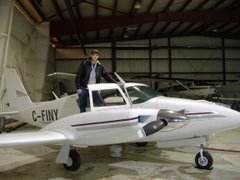
The town I'm going to, in my view, truly is "northern" simply by the fact that it is not connected to the road system. You either have to take a train there or fly. The plan is that I'm gonna pack the Twin Comanche full of my stuff and fly up there. My accomodations are furnished, so I don't need any big furnature.
So that's the news, and that's the plan. More to come once I get up there. I'm sure the first couple weeks will be a bit of culture shock, despite the fact that I'm still in Canada, and a bit of a learning curve, but I'm looking forward to experiencing a different way of living, getting some awesome flying in, and having a source of cool stories that I can tell later in life.
Most of the people who really need to know already do anyways, and I request that those people not post it publicly on the blog, or the comments shall will be removed.
Now that we have laid the ground rules, that shouldn't really interfer with me posting my experiences. So lets start with what I will tell you: I will be a bush pilot in Northern Ontario, flying single engine wheeled airplanes, so I'm pretty pumped. I'm not entirely sure what to expect yet, other than lots of flying (good), lots of cold weather, although summer is beginning soon it shouldn't be too bad, at least not for a while, and half decent pay - nothing fantastic but surprisingly more then I was expecting. I will actually have very few expenses while living up there, and no place to spend money, so I'm counting on being able to save a good chunk of change.
I start at the beginning of April, so once I get up there I'll have lots more to write about. I'm on a pretty big high right now, because this is my first full time, professional job that has "pilot" in the job title. The last year up until this point has been pretty discouraging due to my unsuccess at finding work as a pilot, now it seems to have all paid off, so I feel pretty good. It feels like my "career" is finally beginning. I'm glad I held out for the bush pilot job, and didn't go the instructor route, which some people almost convinced me of doing. The instructor route is the easier way to go, and it works for some people, but its widely recognized that the experience gained flying in the bush is far superior to the safe, highly controlled, simulated environment of flight training. A training flight can always be cancelled if the weather isn't perfect, or any other factor isn't quite right, it can always be done later or in better conditions. Instructors also don't get much actual flying time. They get to log it because they are still PIC, but its mostly just sitting there watching someone else fly. I have heard of some companies only counting half of the time logged as instructor for that reason. Its not true flying experience. Bush flying has a little bit more of a "must be done" importance to it if supplies or people have to get somewhere. That combined with the fact that bush flying is most often over hostile terrain (trees, lakes, mountains) means the bush turns out better pilots, with better judgement then instructing does. That said instructing is a great route if you like teaching and don't want to move north, but its not for me, so I'm excited for the opportunity to go the bush route.
As for this next month, I'm just hanging out in London, enjoying time with friends before I go away, and getting ready. I bought some good hiking boots a couple days ago, and I think I may buy a sweet hunting knife, just because I can, and it would be cool. Hey, you never know when I may have to fend off a pack of vicious polar bears. Ya I know polar bears don't travel in packs. Arctic wolves then.
The town I'm going to, in my view, truly is "northern" simply by the fact that it is not connected to the road system. You either have to take a train there or fly. The plan is that I'm gonna pack the Twin Comanche full of my stuff and fly up there. My accomodations are furnished, so I don't need any big furnature.
So that's the news, and that's the plan. More to come once I get up there. I'm sure the first couple weeks will be a bit of culture shock, despite the fact that I'm still in Canada, and a bit of a learning curve, but I'm looking forward to experiencing a different way of living, getting some awesome flying in, and having a source of cool stories that I can tell later in life.
Subscribe to:
Posts (Atom)