Tuesday, July 2, 2013

The Intricacies of the Checklist

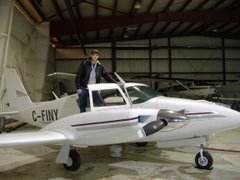
Checklists.  Some pilots swear BY them, other pilots swear AT them.  You either love them or you couldn't be bothered to ever look at them and your checklist has been lost under the seats for the last 6 months.  You know if I'm talking to you.  I've been on both sides of the camp at one time or another, but I think a lot depends on whether or not the checklist has been tailored specifically for your own specific operation or not.  A well designed checklist is crucial to whether its useful in the cockpit or viewed as an inefficient formality that eventually gets disregarded.

Our operation, being survey, is vastly different than the majority of operations out there in some very specific ways, and if we were to use a stock off-the-shelf checklist for a Piper Navajo in our operation it would be essentially useless.  Being a survey operation we're an extreme example, but the same holds true in some way or another for probably every other operation out there, whether its a private owner/pilot that flies mostly VFR, IFR commercial charter operation, cargo carrier, or any of the other endless combinations in between.

There's a fine line between having every conceivable item on the checklist so that it can be 100% reliable in every situation, and having SO many items on it that in regular operations it becomes so cumbersome that pilots start to skim over it or disregard it completely.  Take for example VFR flying and IFR flying.  In IFR flying there a lot of additional instrument checks that need to be made before each flight.  If you're going to be navigating by VOR (a radio nav-aid) for example, its imperative that you check your VOR instrument's accuracy before you take-off and start to rely on it to take you to your destination.  If you're flying VFR however and primarily by GPS and pilotage (navigation by looking out the window and comparing with your map), checking your VOR indicator for accuracy is of critical importance.  And if you fly VFR 99.9% of the time, if you had to slog through a checklist designed for IFR, eventually you'd get tired of the inefficient process of going through all the "not applicable" items, and you'd either stop using the checklist altogether, or start skimming through the items, which has arguably more potential for missing critical items then not using it at all.

Another reason against using off-the-shelf checklists that are not tailored to your operation is because they may not contain critical items on them that are specific to your particular operation, and you won't be able to rely on them 100%.  If you can't trust your checklist, what good is it?

Furthermore, checklists have to be structured in such a way that they prove to be an efficient and useful tool in an environment as dynamic as a cockpit.  There was an accident several years ago of a passenger airline, the time and place of which I can't remember anymore, that was part of a Mayday episode.  The airplane blew a tire on take-off which went unnoticed by the flight crew.  The blown tire ended up erupting into a fire, which spread throughout the airplane after they retracted the landing gear into the aircraft's belly.  The airplane ended up crashing, and while it wasn't the main cause, the investigators noted that the airplane's cabin fire checklist was a sequence that could take as long as 30 minutes to complete.  Due to this the flight crew chose to circle for several minutes while they went through and completed the checklist.  Unfortunately the airplane didn't have that long before the fire consumed the aircraft.  When they could have been descending to land and survive, their checklist and standard operating procedures failed them by requiring that they remain airborne until they completed their checklist.

That is an extreme example of course, but good checklist design can even be applied in the case of an engine failure in a small aircraft.  After an engine failure there are several things that need to be accomplished very quickly in order to maximize your chances of survival.  After those are finished you may or may not have bought yourself a little extra time to troubleshoot the situation.  In almost all cases it makes sense to complete those immediate critical items by memory first as a "flow", and then only once you have time, pull out the checklist, verify what you've already did, and then continue on with the troubleshooting using the checklist line-by line.  This is a great example of using a checklist in two different ways (Do & Verify, or Read & Do line by line), and a checklist design can either hinder that or help that by organizing each section of the checklist appropriately for the method that is best used at each time.

Consider even a pre-landing checklist on a small airplane.  Most pre-landing checklists are completed in the traffic circuit, the time in the flight with the highest air traffic density and when the pilot should have most of his attention focused outside to look for other aircraft and flying the airplane.  A poorly designed and unnecessarily long-winded checklist takes the pilot's attention away from looking for airplanes and down to his lap has he checks off each item line by line.  It may also increase the chances that it doesn't get completed if a distraction occurs mid-checklist (like a radio call).

Until I started putting thought into designing checklists its easy to overlook the multitude of human and operational factors that need to be considered when creating checklists.  Its quite the science actually, and there's even been studies and papers done on the topic.  Here's a fantastic paper from NASA on the concepts, design & use of cockpit checklists.  I found it one day when I was overhauling our checklist for the Navajo and was looking on some guidance on how to structure it.

If you're one of the pilots who isn't in the habit of using your checklist religiously for EVERY phase of flight, maybe you should consider why.  Is it designed in such a way that makes using it inefficient or cumbersome, is it not tailored specifically to your type of operation?  Maybe you'd benefit from a checklist overhaul.

Saturday, June 8, 2013

Zen


After the usual hectic spring rush of dusting off the airplanes from the winter hibernation and getting all the proper survey equipment installed and working, we're off to the races. We have numerous US contracts lined up for pretty much the whole summer, unfortunately their locations are confidential, so I'm going to have to limit my geographically specific writing. Actually I think I'm going to change my blogging style a little anyway.


I used to write in a way that would pretty much follow me along in my exploits chronologically, but I don't write as frequently as I used to, and it gets tiresome to constantly be writing updates to fill in my readers (if I even still have some) on what has happened since I last wrote. Instead I think I'll go back to using the blog as a place to write my musings on aviation related matters, which is sort of how it started to begin with. That way I can maintain the confidentiality requirements of the job and also not feel obligated to keep filling everybody in on what has happened between posts.


Seeing as how I've been flying professionally in the same job now for a few years, new and exciting experiences are becoming fewer and fewer - at least ones that are exciting to write about. This is a good thing career-wise, but makes for boring blogging.


-------------------------


Over the last couple years I've noticed my flying style changing, but not only my style, but how I judge what are good practices and what are not. When I first started flying professionally in Moosonee I was struck by how quickly and proficiently the pilots there would flow through the pre-flight actions. I was impressed by the proficiency and tried to emulate it. I say action and not checklist because we never actually used any physical checklist, it was all by memory and conducting a flow - completing actions by moving from one side of the cockpit to the other in an orderly fashion.


The area where I have changed my thinking now however is that I used to look at the speed at which things are accomplished in the cockpit and equate that with proficiency. Its been through flying with and watching the pilot who first trained me on the Navajo, and through some lessons learned on my own, that speed and fast hands in the cockpit isn't a good measure of skill or cockpit discipline.


There are a lot of external factors exerted on pilots to rush through things. Unexpected hiccups always seem to pop up and bring us behind schedule, company management can instill flight crews with a sense of urgency, and even weather can conspire to create a rushed environment.


The thing I've observed in my pilot-mentor however is that once it comes time to pre-flight the airplane and then climb into the cockpit and start up, he's never in a rushed frame of mind. At first glance, to me at least, when I first started flying with him, his calm, meticulous demeanor came across to me as the opposite of proficiency. Why are you taking so long to start the engines? Haven't you done this 1000 times before?


After a while though I realized that he's taking his time not because he doesn't know what he's doing, just the opposite, but he understands its well worth the extra few seconds to make sure he does things right. Like I mentioned there can be a dozen different factors which contribute to a sense of urgency in the cockpit, but the cockpit should be a place where calm and un-rushed thinking and action takes place. In reality, with the exception of a few specific situations, like an engine failure after take off, very few things with flying take a rushed demeanor and lightning fast reflexes. Almost everything takes a clear mind and can benefit from taking a few extra moments to collect yourself and double check that the action or decision you're making is rational and correct.


Its through watching this pilot that I've learned that a safe flight is much better accomplished by pausing, taking a deep breath, and making sure you take your time and do everything correctly the first time. The rest of life can be hectic, rushed, require snap decisions, go-go-go, but as soon as you walk out to that airplane, its time to change that. Take a deep breath. Do the walk-around slowly. Are the chocks out, is the fuel drained for contaminants, are all the covers off? And down the list you go. When its time to climb into the cockpit; another deep breath. Flight plan filed and open? Cockpit organized? The pressure of time can sometimes tempt you to start up first and then organize things on the go. Temptation tells us "we can do all that stuff later, lets just get out of here first". But as soon as those engines are running, part of your attention for the rest of the flight is diverted to the needs of the airplane. Its only prudent to do as much as you can while the airplane is stationary and not requiring the attention of the pilot. Forget about any pressure to do it faster. Once the cockpit is organized, charts and publications at hand, kneeboard and pen within easy reach, checklist on your lap - another deep breath. Time to start up.


Its all about changing your tempo as soon as you're around the airplane. I call it my zen state. The pace of decisions slow down, the automatic reactions are reeled in and double checked. No external pressure or schedule has any justification anymore to make you go faster than what it takes to do things right.


It can be difficult to switch gears like that, especially for me, but that's where the discipline lies.

Sunday, January 6, 2013

3 Flights, 2 Planes, 1 Day


November 18, 2012

Of course our demob falls on a Sunday.  It always seems to happen like that.  Sundays are the worst days to  travel on:  Places are closed down for the weekend, key personnel aren't working, and we have minimal support from our own office if we need it.  Nonetheless today looks like our only weather window for us to get out of here.  Unless we stop at the hunting lodge on our way back again, like we did on the way up, its going to be a 4 hour flight to Chibougamau for our first fuel stop.  We'll only stop at the lodge if we have to.  There's a few different cloud layers reported on the weather charts for our first leg.  They all look ok.  The Icing chart is forecasting possible icing from the surface to 3000 ft.  If we get stuck scud running again, we might end up having to descend into the icing.  Its actually kind of a crapshoot.  But if we run into icing we can turn around and go back to Kuujjuaq.  It'll be a real bummer if we fly for 2 hours and have to turn around and fly another 2 back, but that's the chance we'll have to take.  Today's our only option for several days.

Our itinerary dictates a stop in Val-d'or again, as our 206 has been left there for maintenance, and the office wants it back in Buttonville for the winter.  So I'll hop out in Val-d'or, my colleague will continue on in the Navajo and I'll come back in the 206.  I'm told (after double checking), that all the paperwork is in order for the 206 and its all ready for me to just hop in and go.  I don't want any surprises when I get there.


We head out to the airport while its still dark.  We gave our gate key back yesterday, so we're hoping we can get in through the construction fence that is left unlocked and can be swung open.  We drive up and I hop out to swing it open.  No luck.  The bottom of it is stuck in the crusty snow.  I can't open it for the life of me.  Now what?  Its early Sunday morning, there's nobody around, even the main terminal building is locked.  There's a crew house that straddles the airport fence, I hop out of the truck and knock on the door, hoping someone's home and can let us in.  No luck, but I go around to the side of the building and see a light on in one of the rooms.  Its a guy sitting in what looks like the lounge watching TV.  Sheepishly I knock on the window to get his attention, and motion towards the door.  Success!  He meets me a the door and I explain who I am, and he lets us through.  He doesn't have a key for the main gate, so we can't bring the truck through, so its a good thing we have already packed the plane, and we just have our own personal bags to bring through.  We unload what we do have and my colleague goes off the park our rental truck and drop the keys.

The sun is coming up now.  Preflight is done, our cargo is tied down, we've checked the weather one last time by huddling up against the terminal building to grab the wi-fi signal there on our phones.  Its time go.  Ten minutes later I'm pulling back on the controls and we "slip the surly bonds of earth".  Gear up, flaps up, power reduced a tad, emergency fuel pumps off, and then a visual check outside to make sure there's no fire or spraying fuel.

There's multiple cloud layers pretty much as predicted on the GFA (weather chart).  We keep a running dialogue on which ones we should go over top and which ones we should duck under.  If we go over top of them we risk trapping yourself on top, unless we're sure the cloud layers clear up before our destination, we go underneath, we risk getting pushed lower and lower and possibly into the icing layer that was forecast.  We spend the first half of the flight in uncertainty analysing the cloud layers and hoping we don't encounter any icing.  We go through a few snow showers, but overall everything goes smoothly.  We land in Chibougamau, fuel up and check the weather.  The weather south of us looks good still, so no overnight here with $7 beer pints.  Onward to Val-d'or!  Another hour's worth of flying and we touch down in Val-d'or.  We're making excellent progress, considering how long it took us to get up to Kuujjuaq a month ago.

We spend about an hour sitting in the Val-d'or FBO checking the weather again and each doing our flight planning from Val-d'or to Buttonville.  By now its 2 PM.  The weather looks promising.  Another 3 hours (at a Cessna pace this time) and I'll be back in Toronto.  Kuujjuaq to Toronto with 2 stops in between in one day is a pretty good day!  I'm really itching to get home too, this last month has been a frustrating one, and the thought at getting all the way back to Toronto in one day is an exciting one.

I start pre-flighting the 206.  Check the fuel, throw my gear in, and check the logs to make sure everything is indeed in order - except that its not.  There's no maintenance release in the Journey Log.  A maintenance release is the paperwork by the shop signing off that the maintenance accomplished has in fact been completed and the aircraft has been "released" back to service.  That is proof to the pilot that the airplane is airworthy.  Even if everything has been physically done on the airplane, if there's no maintenance release, the airplane can't legally fly.  I can't believe it.  I specifically asked if it was ready to go, and its not.  And its also a Sunday afternoon.  The people I need to track down now aren't around.  Suddenly my hopes of getting home today start to fade...

After about a half dozen phone calls I manage to track down the guy that I need from the shop here that can issue me a maintenance release.  Long story short, 2 hours later I've got the paperwork I need, and I'm ready to get on my way.

It'll be dark in an hour.  Its a good thing the 206 is equipped for night flying, and I can legally do it, so that's not an issue.  By 16:30 I've blasted off for my final 3 hour leg into Buttonville.

By 6:00 PM the sky is pitch black.  I'm still north of Algonquin Park, and there's very little civilization around, so the black hole effect is in full force, and I'm flying on instruments.  I see a flicker of mist go over my head, and I wonder if I'm going into cloud.  I turn the landing light on which will reveal any cloud vapour. I'm just skirting underneath a thin layer, so I drop down a couple hundred feet just to be sure I don't go IMC.  I've got the red cockpit map light on and my VNC (VFR Navigational Chart) on my map, following along my progress as best I can.  Highway 17 is just about to pass under me, and I can see the lights of the occasional lonely car winding its way along.  I look out my right window towards North Bay and while I can't see it directly, I can make out the faint glow of the city lights.  That also means I can probably tune into the automated radio weather report that the North Bay airport broadcasts.  Sure enough its reporting a scattered layer at 3000 ft, which just about matches up to the layer I'm passing under.  I check my map to make sure my altitude of 2500' is still above the MOCAs (minimum obstacle clearance altitude) for the sectors I'm flying through.  Barely, but it is.  MOCAs account for clearance above the highest terrain or man made obstacles in a map sector plus an extra couple hundred feet.  It would be very imprudent to descend below the MOCA while flying on a dark night when the ground is nothing but blackness.

I watch as the highway passes beneath me, and I know I'll be over Algonquin Park shortly.  I can only faintly make out the differences between the little lakes and forests passing underneath me.  It would be a very bad time for an engine failure right now.

Twenty minutes later I see Huntsville off to my right, which signifies my exit out the south side of the park.  Civilization is starting to appear more and more, which is comforting as now that I can make out more and more ground lights I can transition back to visual flying.  Soon enough I'm skirting along the eastern shore of Lake Simcoe, and the glow of Toronto comes into view.  I look out over the simcoe region and take in the patchwork grid of streetlights and small communities amid the darkness.  Night flying really is stunningly beautiful in a really lonely way.  I wish I could get to do it more.

I expect Buttonville airport will be fairly sleepy after dark, as most flight training is done during the day.  Boy am I wrong.  I tune into the tower frequency and once again its rapid fire radio calls.  Approaching the zone I'm cleared for left base for runway 15 behind a Cessna 150, with an altitude restriction to stay above 2000 ft.  I look for the 150, and also for the airport.  Buttonville airport is notoriously difficult to find visually at night, hidden in among all the city lights, but I can see highway 404 so I know where it SHOULD be, and according to my GPS I'm lined up for a good base leg.  Its likely I'll find it when I turn to light up with the runway.

Soon enough I'm turning final, and I still haven't had my altitude restriction cancelled.  In between the radio chatter I manage to squeeze in a request for confirmation that I can descend freely, which I'm granted.  I dump the flaps and pull the power off.  This plane will sink like a rock if you want her to.  Its been a while since I've landed at night.  Its a matter of feeling your way down into the flare ever so slowly until the wheels touch.  The tires rolling onto the pavement catch me by surprise.  My night touchdowns usually do.  For some reason I always think I'm a littler higher than I really am, but they're also almost always buttery smooth.  I suppose I should be happy it was such a good landing, but it doesn't feel satisfying when it happens before I'm ready.

I taxi in and find a parking spot.  With perfect timing my colleague pulls up in the Van, I guess he decided to wait for me after all.  What a guy, its nice to have a welcoming party.  Toronto here I am!  Its been a long day, and I still find it hard to believe I was in Kuujjuaq just this morning.  That's some serious mileage behind us in one day.  We really lucked out with the weather.  I think that's actually the furthest I've flown as the crow flies in a single day.  We check into our hotel for the night.  Tomorrow we'll stop by the office and square some things away.  While this was the last job of 2012, I'm in the process of being promoted to Chief Pilot, so I'll have lots of desk flying to keep me busy in the downtime.

Saturday, January 5, 2013

By Golly We Did It

November 17, 2012

By golly we did it.  In truth it was just luck of the weather really.  The last couple days before our deadline the weather cleared up - not beautifully - but just enough to go flying.  We got our last couple flights in and finished the project the day before our deadline.  As far as the office is concerned, we're heroes!  We're happy to take the credit - of course if the weather didn't clear up we'd be blaming the weather left and right.

Now we gotta get out of here.  We pack up what we can while we wait for approval from the office to demobilize.  Until we get clearance to go we have to remain operational in case we have some re-flights to do.  That means keeping our base station set up, and the airplane ready to survey.  We're busy organizing things getting ready to go however.  It looks like there might be a small weather window tomorrow to get out of here before another snowstorm hits.

We get our approval to get out of here.  We spend the rest of the day tearing down our base station, and packing the plane.  There's more than one extension cord frozen into the ground or buried beneath several inches of crusted snow.  I manage to extricate all but one.  The last one is a lost cause, so some lucky person gets a free extension cord when it finally melts free in the spring.  Its not the first time we've had to leave extension cords that have been frozen or buried.  Go to bed early tonight, we're going to shoot for an early morning departure tomorrow, and it might be a long day.

Wednesday, November 14, 2012

Winter Surveying

Northern Quebec in late autumn was indeed a bad idea.  We spent over two weeks watching Low pressure system after Low pressure system pass over top of of us.  Rain, freezing rain, snow, winds, low cloud, you name it.  Finally about a week ago things started clearing enough for us to go flying.

These survey blocks are short lines, tightly spaced, in very jagged terrain, and with no drape file.  Very intensive flying.  A drape file is a file that's loaded into our navigation system to give us terrain guidance based on topographical data.  We fly lines in both directions to make a grid, and for data-quality reasons the line intersections between both directions have to cross at the same height.  So to make it easy on us, the drape file is like "draping" a blanket over the hills.  This gives us a vertical flight profile that follows the hilly terrain in a general fashion, crossing the small valleys smoothly and giving us an achievable climb gradient to get up the mountains within the aircraft's performance limitations.  Without drape guidance, we have to estimate ourselves what height we should be at any given time.  With practice and experience it can be done, but it is one more variable to stay on top of.

With the short lines it means we can do upwards of 60 lines every flight, which also means 60 turns.  Turns are similar to an IFR procedure turn - after exiting the block you make a 45° turn away from your next line, wait until you're a certain number of metres away from the line laterally, and then make a 180° back around the other way to intercept the line.  Generally turns take about 2 minutes, but if we're doing 60 turns a flight, for every ten seconds we can shave off in each turn, we can save ourselves 10 minutes over the course of the flight, so in these scenarios its highly beneficial to do what I'm going to call a "performance turn".  With performance turns we accomplish the entire turn in about 1 minute.  This is done by shortening each leg of the turn, and then instead of a 30-35° bank, we're banking as hard as 45-60°.  And we make the timing such that we roll out level on-line only seconds before entering the grid.  Its half science, half art to get the turns and timing perfect enough that you're not wasting time rolling out onto the line too far back, but not so close that you risk entering the block before you're lined up.  Its all based on hitting your key points:  At 90° to my line I should be at 900 metres cross-track - if I'm less I need to pull harder, more and I can relax the turn a bit.  60° to my line - 500 metres, 30° - 200 metres, and if I hit 20° and 100 metres I can start rolling out smoothly and I should end up wings level within +/- 30 metres of my line.  From there it takes only a few more seconds to fine tune it to less than a couple metres.  No more than a minute from exiting the grid to entering again on the next line.  Things happen fast.  This is high workload flying indeed.

Our day starts long before this however.  We leave our hotel rooms at 05:45 AM, its still dark.  We have limited daylight and we're trying to make use of the good weather and get two flights in today, but everything has to go perfectly - any delays and taking off for a second flight won't be practical.  We're shooting to be airborne by first light.  We have to fuel the airplane, brush off the 4 inches of snow that accumulated last night, unplug the two engine heaters and 1 cabin heaters and pull off the engine blankets, and then start up our base station so its logging atmospheric magnetic data (a requirement for a survey flight).

Our fuel drums are stuck in a pile of ice and snow.  We work away in the dark.  It takes two of us to wrestle each of the four 300 lb steel barrels out of the snow and get them on the ramp where we can roll them over to the airplane.  Even rolling them isn't easy today.  Two of the drums are dented so badly they don't roll very well.  I'm exhausted by the time we get them to the airplane, and my throat is hoarse from the exertion and sucking in -10° C air.  My foot also hurts - in the process of standing one of the drums up, I let it land on my foot.  I'm okay, but I'm already a little bit grumpy in the morning as it is, dropping a 300 lb drum on my foot doesn't help my mood.

I help get my colleague set up to fuel out of the first drum, and I start to brush the snow off the airplane. Its been cold enough that the snow easily brushes off, thank goodness.  The windshield is a different story.  We have to keep a space heater running inside the cabin to keep the survey gear warm, and as a result the snow that has fallen on the windshield has partially melted, and then frozen solid to the window.  Unlike a car windshield, our airplane windshield is plexi-glass, so we can't just scrape it off or we'll scratch it all up.  I climb into the cabin and position the space heater up at the front, pointing at the window.  Back to brushing.

Finally we're fuelled and the airplane is clean - off we go.  We're behind schedule now and the sky is bright morning, but we're airborne, the weather is clear, and the airplane is climbing like a homesick angel in the cold air.  Up until now the few flights we have been able to do have been through snow showers and moderate turbulence.  The kind of turbulence where you have to brace your palm against the throttle quadrant and adjust the leavers by pushing them at the base, lest a big bump causes you to yank on them.  Its a little bit smoother today however.

Three hours later.  We're churning out survey lines like a well-oiled machine.  I'm pulling hard through a "performance turn".  On this line in particular, in addition to watching the numbers on my digital display tick away like a slot machine on steroids and making sure I hit my key points, my neck cranes just a bit as I watch out my window.  There's a cliff scrolling by my windscreen from top to bottom as I crank the airplane around in a steep turn.  Its just a little cliff, peaking about 100' below my altitude so we'd clear it anyway if it wasn't already outside my turning radius, but its still an obstacle to keep in sight.

Rolling out on-line and entering the block, there's a small cliff we dive over and then skim a small lake at 230' agl.  Its starting to freeze over.  From there its up the side of a rocky 1000' mountain.  The pine trees start to thin out about halfway up as the soil gives way to exposed windswept rock.  Everything is covered in a blanket of white.  If I looked down to see some chipmunks and reindeer throwing tinsel on a tree I wouldn't bat an eye.  Most of the mountain is on my left side.  To my right I look down to the valley, spotted with lakes and carpeted by pine.  I glance at the mountain to my left every few seconds - this time not because its a hazard, but because I have remember/imagine what height we were at when we came cruising down the side of it on the lines running perpendicular to the ones we're flying now.  Remember we have to intersect lines at the same height, and we're working without a drape.

In the past my colleague and I have been known to engage in some good natured debating over what the proper height should be.  We have differing views on how a lot of things should be done actually, but we handle it in a humourous manor so in fact we get along quite well.  Its almost tradition now for whoever is riding shotgun at any particular moment to engage in some armchair aviating over what the proper drape height should be.  A guy's gotta get his two cents in.  Not much of that today though, we're both pretty busy and in the groove, not much talking is going on.

Four hours later.  We finish our last line, this block is finished, and our fuel will be running low soon, its time to head back.  There's more blocks to do however, and we're still entertaining the thought of getting two flights in.  We land, relieve ourselves, grab something to eat, and get right back to work fueling again.  This time our fuel drums are not only stuck in the snow, they're frozen solid to the ground under almost an inch of ice.  After much kicking, prying, chipping, and grunting we get them free, but that delay was the nail in the coffin for flight number 2.  By the time we get them free enough to roll over to the airplane we should have been almost ready to start the engines.  Time to call it a day.

Friday, October 26, 2012

I Love the Smell of Avgas in the Morning


We spent 3 more days stuck in Chibougamau while a stationary Low pressure system had its fun swirling around in the North Atlantic bringing a mixture of freezing rain, low cloud and high winds in Northern Quebec.  In the meantime my colleague and I found a bar in town that served fantastic ribs and $5 pints.

Finally the weather forecast clears enough for us to take a shot at going north.  The weather in Kuujjuaq is currently showing the ceilings at 3500' with an improving trend, but the forecast still says its going to drop to 1500, but no freezing rain is forecast like what has been common for the past few days.  Thirty-five hundred feet is plenty, and I wonder if the forecast is wrong as it has been made several hours ago, even if its not it should still be enough to get make it in, even with the rising terrain in the surrounding area.  We have also found a good place to stop for fuel about halfway in between Chibougamau and Kuujjuaq.  On the suggestion of another colleague we found an airstrip belonging to a hunting lodge.  They had fuel and rooms available in case we had to stay overnight.  That meant if we stopped for fuel there we would have enough range to fly to Kuujjuaq and then come back to the lodge if the weather turned sour.  The runway at the hunting lodge was a 3500' gravel strip.  Under the current conditions our performance charts list the landing distance as 2500' under ideal conditions, which means 3500' is long enough to get into, but you also don't want to waste any time getting on the ground when landing, especially on a gravel strip where there will be limited braking effectiveness.

Before we take off I call to make sure someone could meet us at the airport to give us fuel.  The CFS notes to overfly the lodge prior to landing to alert them of the arriving aircraft.  I'm slightly disappointed when the woman I'm talking to assures me that won't be necessary and she'll make sure someone is there at the time we expect to arrive.  Two hours later and the airstrip comes into view.  We fly overhead first to check the windsock to determine which direction to land in.  The winds were pretty light, in the 5-8 knot range, 90° to the runway.  On final I shave 5 mph off our normal approach speed of 120, and tell myself if I'm not on the ground in the first third of the runway, we'll go around.  It always helps to remind yourself of the options, and review the actions you'll take, that way it will take less time to process and make the decision if you have to.  Hesitating at those moments is what leads to accidents.

The key to remember during short field landings, is that the landing flare always results in landing long of where you aim the airplane during your approach.  So if you want to touch down at the runway threshold, you have to start your flare slightly prior to crossing the threshold.  A flare is the process of trading in your last bits of excess airspeed (kinetic energy) in exchange for slowing the loss of altitude (potential energy), so naturally this will carry you further down the runway.  So I aim for 50 ft before the runway begins, and I smoothly pull the power off as I clear the last few trees.

Most of the runways we've been landing on this summer have been 10,000 ft long, so up until now I've been enjoying the extra space to try and finesse the airplane down with as little bump as possible.  To do so you leave a little bit of power on into the flare which gives you more time to find the sweet spot before your last bits of airspeed bleed off and the airplane stalls onto the runway.  I've been getting pretty good at it if I do say so myself, but I use up a lot of runway in the process.  This time however, the priority is not about greasing the touchdown, but to get the airplane down as close to the runway threshold as I can.  A power off flare means the airspeed diminishes rapidly and you have less time to find the sweet spot in the flare.  I manage to nail my target touchdown point, and the touchdown itself is not too bad either.  The next concern now is to keep the controls pulled back as much as possible to keep the nose of the airplane high and the props from sucking up bits of gravel.  The props on this airplane are brand new from the overhaul shop, and my boss would have my head if I put a ding in them from improper gravel runway operations.  Since I've managed not to waste any runway I can also keep the braking to almost nil as well, which also helps to keep the nose up.  We keep the airplane rolling (another technique to prevent gravel being sucked into the props) until we pull up onto the concrete pad at the fuel pumps.  I get a nod of "very nicely done" from my colleague, and we shut down.

Its cold here, we've gone from a crisp winter air in Chibougamau to a biting winter cold here in the interior of northern Quebec.  I was wearing my running shoes, but decide its time to put my boots on.  Winter has arrived, or I suppose more accurately we have arrived where it is winter.

Airplane gassed up, and we're ready to go again on our second leg.  We manage to quickly check the weather at the lodge, and its now saying 1700' overcast - looks like the forecast came true after all   The lodge airstrip here is in the highest terrain, pretty much everything from here on to Kuujjuaq is downhill to Ungava Bay.  The clouds here are also still pretty thin, and high enough not to pose a problem.  We shouldn't have any problems with the terrain rising to meet the cloud layer, and hopefully, not visa versa either.  I decide to continue on.  Turns out not so much.  Much of our flight is spent descending lower and lower.  The terrain is descending, but so are the clouds, and at a faster rate.  Fifty miles from Kuujjuaq and we find ourselves scud running at less than 500' agl and weaving around freezing rain patches.  In built up terrain like southern Ontario this would be a no-no as there are restrictions on how low we can fly over built up areas and other property and people (except during survey where we usually have permits to do so).  But in remote, uncontrolled airspace like northern Quebec, our only requirement is to remain clear of cloud, so from a legal standpoint we're still ok.  From a safety standpoint if it came down to it we could climb up through the clouds if we absolutely had to.

Finally as we near Kuujjuaq the last bits of higher terrain fall away and we find ourselves back at a reasonable altitude.  We made it, finally.

Friday, October 19, 2012

Contingency Plans

We have a short survey to do up in Kuujjuaq, QC.  For those who don't know where that is, its on the southern tip of Ungava Bay in Northern Quebec.  Its really a bad time of year to go up and do a survey there, but our client is in a bind, so we're going up anyways.  It has not been a good start.  We got out of Toronto ok, and met up with the 206 crew in Val-d'or for the night, as they had some parts in the van that we needed to take with us.  The next day the weather was good enough to get to Chibougamau, which is only about an hour flight NE of Val-d'or, but beyond that the weather had turned sour.  So we stayed here for the night.  A little progress at a time is better than none.  Our next hop however is going to have be in one go all the way up to Kuujjuac, which is 540 nm, or about 3.5 hrs, the only airport that is even remotely in between is La Grande-4 (CYAH) - you know, the one next to Lake Katatipawasakakamaw.  Yes that is a real lake, and the spelling is correct.  Anyway that's not even really a real airport, just an airstrip to service the generating station.  There's certainly no Avgas available..  But it looks like we're going to be hanging out here in the "Chiboug" for a bit as the weather for the next few days is going to be crap.

We actually had a CHANCE that we could have made it into Kuujjuaq yesterday, and I'll elaborate on that in a bit, but first I'm going to change topics.

I've started reading a book recently called Bravo Two Zero.  Its about a British SAS team behind the lines in Iraq, and their mission to go blow up some SCUD sites and communication lines.  I'm only about a third into it now, and up until this point its just been build-up, mostly about planning the mission.  He goes into excruciating detail on how they did their mission planning, and I actually find it quite fascinating to learn how they operate.  He describes how they have a contingency plan for every possible scenario.  If some of their guys go missing on patrol, they will rendezvous at such and such a place at such and such a time and wait for a defined period of time.  If the RV isn't made by the deadline, they have further procedures laid out to follow.  The order at which they exit the helicopter is preplanned so when they get dropped off they are able to follow certain procedures in case they end up unloading under fire.  They even have procedures to follow in case they have a communications failure with home base - they will RV with the helicopter at a specified time and place, down to the details of how the team leader will approach the helicopter and exchange radios and the signals to be used in case the heli has an urgent message for the team leader.  They have a plan for every possible scenario.

I'm sure by now some of you may see where I'm going with this.  Flying is done in much the same way, especially IFR flying - every possible contingency is planned for.  In IFR flying we try to plan for every possible contingency with the assumption that nothing is going to go right.  With IFR of course the assumption is always that the weather will be IMC (Instrument Meteorological Conditions).  So what if we have an emergency immediately after takeoff, such as an engine failure or fire, or other malfunction?  Of course we won't be able to return for a landing visually, so we better already have our Nav instruments tuned so that we're ready to conduct an instrument approach to land at the airport we just departed from.  That way there's no scramble to re-tune everything in what is already going to be a hectic cockpit environment.

There are also standard procedures laid out for a communications failure at any phase of the flight so that both pilot and controller already know what to expect from the other.  Controllers when they issue instructions or clearances, such as a hold, they'll include a statement at the end that says, "... expect further clearance at [time] (for example 12:36)".  That is more than just for the pilot's convenience, it is so that if a comm failure happens at some point following the last issued clearance, the pilot will then know for how long to continue his hold for before he can then automatically continue on to the next step, and he can do so knowing that ATC is expecting this.

Of course I also have to mention the contingencies that are in place regarding carrying extra fuel.  Even though IFR flying is intended to give the ability to fly and land at your destination in bad weather, there still exists the possibility that the weather will be SO bad that we won't be able to sight the runway even if we're flying an instrument approach.  In this case before we even take off we've included in our planning an alternate airport.  This alternate airport must have weather that is forecast to be significantly better than what would normally considered to be IFR weather minimums.  It is for this reason that the regulations state that we must carry sufficient fuel to:

1)  Fly to our destination
2)  Carry out an instrument approach, AND a missed approach (which is the procedure to overshoot and climb back to a safe altitude if the runway isn't visually spotted)
3)  Fly to our alternate and carry out an approach there
4)  Fly for an ADDITIONAL 45 minutes

These requirements are actually pretty restrictive, but its all designed so that we have a plan in place for every possible scenario, which is key in managing unforeseen circumstances that are out of our control.  In Southern Ontario or most of the United States these fuel restrictions would actually be no big deal most of the time, because your options for finding an alternate are many, so chances are you'll be able to find an airport that's not too far out of your way that has good enough weather to land, and also has gas available to refuel.  In the north however, airports are few and far between which means your alternate is going to be a LONG way away, and you better call first and VERIFY that they have fuel available, cause many times even though its listed as having fuel in the publications, it may be in drums.  If it is you better be carrying a pump with you.  Even still they may not even have some in stock.  This ain't no USA where you can land anywhere and have your pick of where you buy your fuel.  Planning is even more critical in remote areas like Northern Canada.

There's FAR fewer legal restrictions on VFR flight planning.  We only legally require to have an extra 30 minutes of fuel onboard, and much more is left up to the pilot's best judgement in regards to how to handle communications failures and the like.  This means much more freedom, but also requires an equal amount of more caution and good judgement.  In our case at this moment, if we were to file IFR to Kuujjuaq, we'd be able to penetrate the weather that is grounding us right now, but we wouldn't actually be able to carry the legal minimum in fuel.  At our current weight we're only able to take 5.2 hrs of fuel with us, but to file IFR we'd need 3.5 hrs to get to Kuujjuac, roughly another 0.3 to complete the approach and missed approach, and then from Kuujjuac the best alternate I can come up with at the moment that has fuel (just by taking a quick look) is 315 nm away, which is another 2.2 hrs of flying including the approach, and then add on our 45 minutes reserve fuel.  That's a total required fuel load of 6.8 hrs!  Almost double what we're actually going to burn, and WAY more than we can physically carry.  IFR isn't always a feasible option.

Of course the flip-side is that if we fly VFR we can legally make the flight without having to have enough fuel to go somewhere else - that's a big extra freedom - but we better be dang well sure we're going to be able to land when we get there, because the fuel we'll have left in the tanks won't be enough to take us to the next nearest place that has avgas available.  So its nice that we have the freedom to do that flying VFR, but it requires that we play it extra conservatively with the weather.  Which brings us full circle all the way back to yesterday:

When we landed here in Chibougamau yesterday and checked the weather, the Kuujjuac weather was reporting 1 1/2 miles visibility with 400 ft vertical visibility (not a cloud ceiling but snow that was thick enough prevent visual contact with the ground above 400 ft).  That's certainly not VFR.  The weather forecast however was saying that by the time we got there it would have cleared up to marginal VFR weather conditions, which would allow us just enough leeway to land.  BUT - without enough fuel to go somewhere else, do we put all our cards on the weather forecast and bank on it clearing up?  I think not.